
Setting The Record Straight
Fact vs Fiction
Fact vs Fiction
A clear response to in-water cleaning myths
Slime, microfouling and reclaim
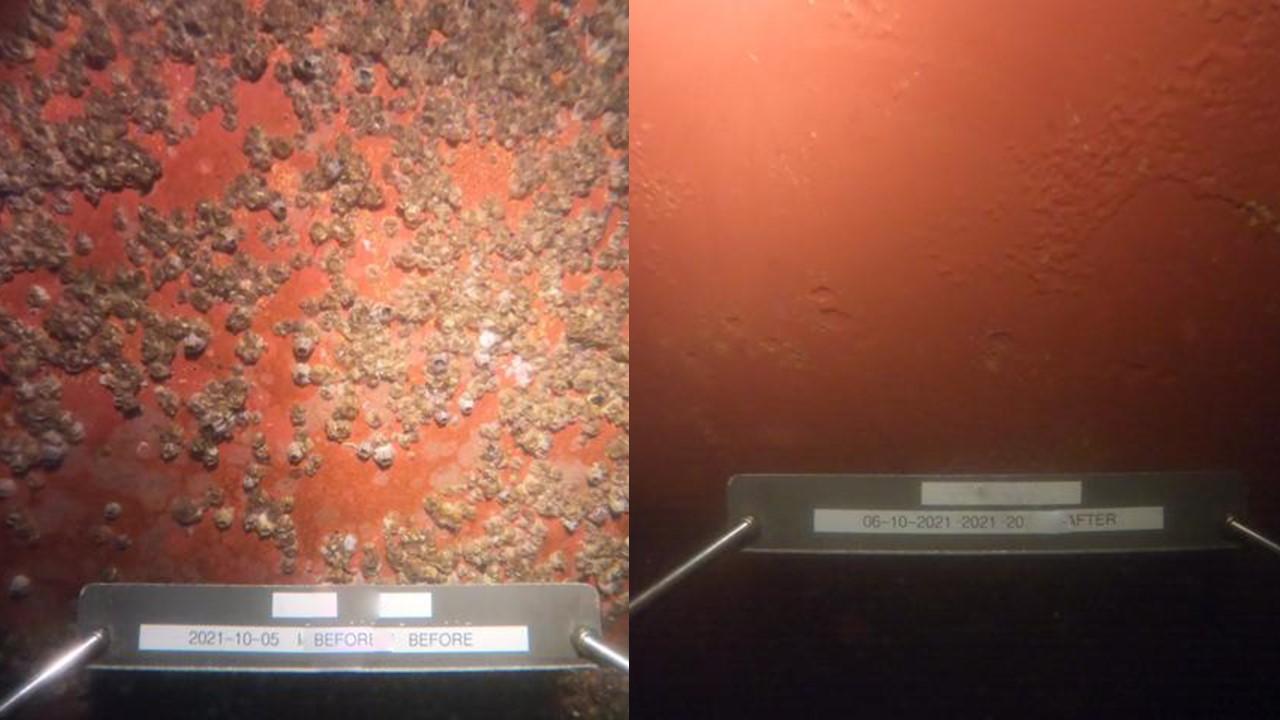
Small or early-stage fouling is not the same as no environmental risk.
Slime biofouling is harmless.
Slime is a living biofilm. It can contain microbial communities, spores and early life stages that may create biosecurity risk when moved between ports.
Microfouling does not need reclaim.
Removing slime can disturb coating residue and live organic material. Capture and treatment are still required to control the waste stream.
Capture is optional if the hull looks clean.
A visual result does not prove environmental control. Removed material must be captured, transferred, filtered, treated and reviewed.
ROV-only cleaning and thruster wash
Open-hull claims do not solve every real-world cleaning pathway.
ROV carts can complete an entire hull without intervention.
ROVs can be effective on suitable flat areas. Niche areas, low visibility, curvature, sea chests, bilge keels, rudders and heavy macrofouling still require direct diver control.
Thruster wash does not extract or spread fouling.
Water movement around fouled surfaces can dislodge, fragment and disperse biological material if it is not captured and reclaimed.
All cleaning methods are equivalent if the hull is visibly clean.
The difference is containment. Cleaning methods should be judged by capture, reclaim, treatment, monitoring and evidence — not only speed or appearance.
Filtration, UV and coating residue
Physical separation and biological treatment are different control functions.
Filtering to 10 microns makes UV unnecessary.
Filtration removes particles and solids above the filter rating. UV treatment addresses biological viability after filtration improves water clarity.
Copper and zinc capture are unnecessary.
Antifouling systems can release metal-bearing particulates or dissolved compounds. Uncontrolled discharge can add to local sediment loading.
Clean-looking discharge proves compliance.
Clarity alone is not enough. Responsible operations require controlled capture, treatment stages, monitoring outputs and waste-handling evidence.
"Clean hull. Controlled process. Verified performance."